
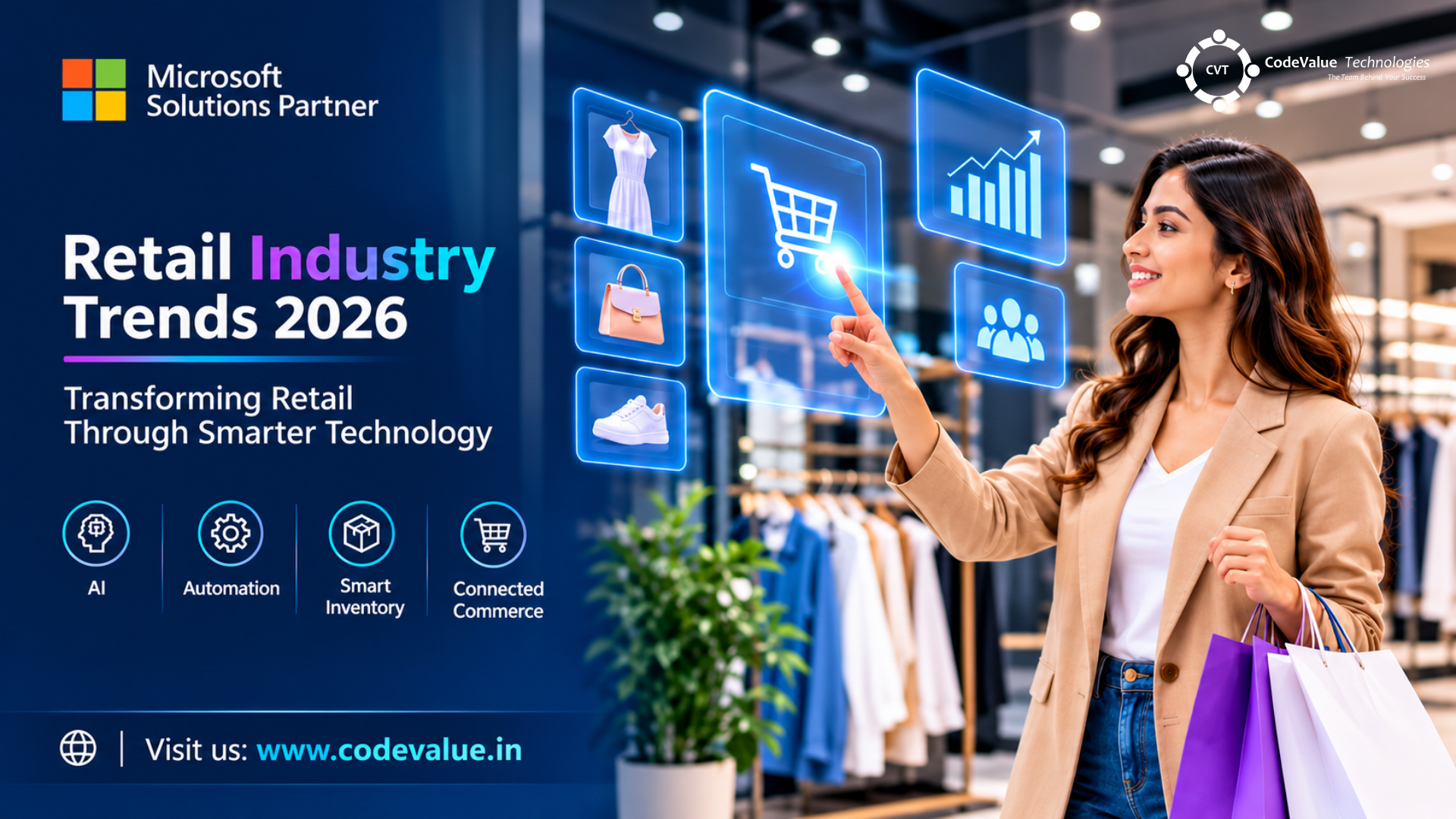
The retail industry is undergoing a major transformation as technology continues to reshape how businesses operate, engage customers and manage their supply chains. From traditional brick-and-mortar stores to digital-first shopping experiences, retailers are adopting smarter technologies to meet changing customer expectations and remain competitive.
In 2026, digital transformation in retail is moving beyond e-commerce and basic automation. Artificial Intelligence (AI), predictive analytics, intelligent inventory management, unified commerce and business process automation are becoming essential for modern retail operations.
Customers expect convenient shopping experiences, personalized recommendations, faster deliveries and consistent service across online and offline channels. At the same time, retailers must manage rising operational costs, inventory challenges, supply chain disruptions and increasing competition.
This makes digital transformation an important business priority.
In this article, we explore the key retail industry trends shaping 2026, the technologies driving change and how Microsoft Dynamics 365 and Power Platform solutions can help retailers build more connected and efficient operations.
Table of Contents
- Key Trends Shaping the Retail Industry in 2026
- Why Is Digital Transformation Important in Retail?
- The Role of Microsoft Technologies in Retail Transformation
- Challenges in Retail Digital Transformation
- What Does the Future of Retail Look Like?
- Transform Your Retail Business with CodeValue
1. Key Trends Shaping the Retail Industry in 2026
Technology is creating new opportunities for retailers to improve business performance, understand customer behaviour and simplify everyday operations. Here are seven important trends influencing the retail industry in 2026.
1.1 Artificial Intelligence and Agentic AI in Retail
Artificial Intelligence is changing how retailers manage customer interactions, business processes and operational decisions.
Beyond traditional chatbots, AI-powered assistants and agents are increasingly being explored to support more complex business activities. They can help employees retrieve information, analyze business data and coordinate certain workflows.
Some key applications include:
- AI-powered customer service and virtual shopping assistants.
- Intelligent product recommendations.
- Automated business process support.
- AI-assisted demand forecasting.
- Faster access to operational and sales information.
These capabilities help retailers reduce repetitive tasks, improve customer engagement and support faster decision-making.
1.2 Unified Commerce and Omnichannel Retailing
Modern customers interact with retailers through multiple channels, including physical stores, websites, mobile applications and social media.
They expect a consistent shopping experience regardless of where they discover or purchase a product.
Unified commerce focuses on connecting these channels through integrated business systems.
Key developments include:
- Connecting online and offline sales channels.
- Centralized customer and product information.
- Consistent pricing and promotional management.
- Flexible delivery, pickup and return options.
- Improved visibility into customer orders.
By connecting different retail channels, businesses can create a smoother shopping journey and improve customer satisfaction.
1.3 Predictive Analytics and Intelligent Inventory Management
Inventory management is one of the most important areas of retail operations. Overstocking increases storage costs, while stock shortages can result in lost sales and dissatisfied customers.
Retailers are increasingly using data analytics and AI-powered forecasting to improve inventory planning.
Important applications include:
- Analyzing historical sales patterns.
- Forecasting product demand.
- Identifying fast-moving and slow-moving products.
- Monitoring inventory across multiple locations.
- Improving replenishment and purchasing decisions.
With better inventory visibility and forecasting, retailers can maintain appropriate stock levels and reduce unnecessary operational costs.
1.4 Personalized Customer Experiences
Customer expectations are changing. Shoppers increasingly prefer personalized recommendations, relevant offers and experiences based on their interests and purchasing behaviour.
Retailers are using customer data and AI technologies to understand buying patterns and deliver more relevant interactions.
Examples include:
- Personalized product recommendations.
- Customer-specific discounts and promotions.
- Behaviour-based marketing campaigns.
- AI-powered shopping assistance.
- Personalized loyalty programs.
Personalization helps retailers build stronger customer relationships, improve engagement and encourage repeat purchases.
1.5 Smart Supply Chain and Warehouse Automation
Efficient supply chain management is essential for retailers handling large product volumes and multiple distribution locations.
Connected technologies are helping businesses improve visibility across procurement, warehousing, transportation and inventory movement.
Some important developments include:
- Barcode and QR-code-based product tracking.
- Real-time inventory monitoring.
- Automated warehouse workflows.
- Improved procurement planning.
- Better coordination between warehouses and retail stores.
These technologies help reduce manual errors, improve order accuracy and support faster fulfilment.
1.6 Data-Driven Retail and Real-Time Business Intelligence
Retail businesses generate large amounts of data through sales transactions, customer interactions, inventory movements and financial operations.
However, the real value of data comes from turning it into meaningful business insights.
Business intelligence solutions such as Microsoft Power BI help retailers analyze operational performance through interactive dashboards and reports.
Common applications include:
- Real-time sales performance monitoring.
- Store-wise and product-wise sales analysis.
- Revenue and profitability tracking.
- Customer purchasing pattern analysis.
- Inventory and stock movement reporting.
With access to meaningful business insights, retail managers can identify opportunities, monitor performance and make informed decisions.
1.7 Social Commerce, Mobile Commerce and Quick Commerce
The growth of smartphones and social media has changed how customers discover and purchase products.
Social commerce enables businesses to connect product discovery and shopping through social platforms, while quick commerce focuses on faster order fulfilment and delivery.
Retailers are exploring:
- Mobile-friendly shopping platforms.
- Social media-driven product discovery.
- WhatsApp-based customer engagement.
- Digital payment solutions.
- Faster order processing and delivery management.
These developments are helping retailers reach more customers and provide convenient shopping experiences.
2. Why Is Digital Transformation Important in Retail?
Digital transformation is not just about introducing new technologies. It involves improving business processes, connecting systems and using information more effectively.
Here are some important reasons why retailers are investing in digital transformation.
Improved Customer Experience
Connected systems and personalized services help retailers understand customer needs and provide convenient shopping experiences across different channels.
Better Inventory Visibility
Integrated inventory systems help businesses monitor stock levels, track product movement and improve replenishment planning.
Increased Operational Efficiency
Automation reduces repetitive manual activities and helps employees focus on more important business responsibilities.
Faster and Smarter Decision-Making
Business intelligence and real-time reporting provide better visibility into sales, inventory and financial performance.
Improved Supply Chain Management
Connected supply chain processes help retailers coordinate procurement, warehouse operations and order fulfilment more effectively.
Business Growth and Scalability
Modern technology platforms help retailers adapt to changing market conditions, expand operations and support future business requirements.
3. The Role of Microsoft Technologies in Retail Transformation
Microsoft business applications provide retailers with tools to connect operations, automate processes and gain better business visibility.
As a Microsoft Dynamics 365 Solutions Partner, CodeValue helps businesses explore and implement Microsoft technologies that align with their operational requirements.
Here are some important Microsoft solutions supporting retail transformation.
Microsoft Dynamics 365 Finance and Supply Chain Management
Microsoft Dynamics 365 Finance and Supply Chain Management helps businesses manage financial operations, procurement, inventory, warehousing and supply chain processes.
For retailers, it supports:
- Inventory and warehouse management.
- Procurement and vendor management.
- Financial reporting and control.
- Supply chain visibility.
- Business process integration.
Microsoft Power BI
Power BI helps retailers transform business data into meaningful insights through interactive dashboards and reports.
Retail businesses can monitor sales performance, inventory levels, profitability and operational metrics in one place.
Microsoft Power Apps
Power Apps enables businesses to build custom applications for their specific operational requirements.
Retailers can use these applications for inventory counting, warehouse activities, store operations and other business processes.
Microsoft Power Automate
Power Automate helps automate repetitive workflows, approvals, notifications and business processes.
It reduces manual intervention and improves coordination between different business functions.
Microsoft Dynamics 365 Commerce
Dynamics 365 Commerce supports connected commerce experiences by bringing together digital commerce, in-store operations, point-of-sale capabilities and customer engagement.
It helps retailers provide consistent shopping experiences across multiple channels.
4. Challenges in Retail Digital Transformation
Although technology offers several opportunities, implementing digital transformation requires proper planning and execution.
Retailers may face challenges such as:
Legacy Systems: Older applications may not easily integrate with modern business platforms.
Data Silos: Customer, sales, inventory and financial information may be maintained in separate systems, making it difficult to get a complete business view.
Implementation Costs: Technology investments require careful planning, budgeting and resource allocation.
Employee Adoption: Employees need proper training and support to adapt to new digital processes.
Data Security: Retailers must protect customer information, payment data and business records.
A successful transformation requires the right technology, a clear implementation strategy and continuous improvement.
5. What Does the Future of Retail Look Like?
The future of retail will be increasingly connected, intelligent and customer-focused.
Emerging technologies such as AI agents, advanced analytics, Internet of Things (IoT), augmented reality and automation are expected to create new opportunities for retailers.
Some developments to watch include:
- AI-powered shopping and business assistants.
- Smart stores with connected devices and systems.
- Advanced demand forecasting and inventory optimization.
- More personalized customer experiences.
- Automated warehouse and fulfilment operations.
- Connected retail platforms with real-time business insights.
Retailers that embrace these developments can build more flexible operations and respond effectively to changing customer expectations.
6. Transform Your Retail Business with CodeValue
Digital transformation is becoming an important part of building a successful retail business. From inventory management and warehouse automation to business intelligence and connected operations, the right technology can make a significant difference.
At CodeValue, we help businesses leverage Microsoft Dynamics 365, Power Platform and Power BI to simplify operations, automate workflows and improve business visibility.
Our expertise in Microsoft business solutions helps organizations address operational challenges with technology designed around their business requirements.
Whether you are looking to improve inventory management, streamline warehouse processes, automate business operations or gain better insights through analytics, CodeValue can help you take the next step towards digital transformation.
Ready to modernize your retail operations?
Connect with CodeValue to explore how Microsoft business solutions can support your retail transformation journey.